Teaching and Learning Symposium

Cultivating Access for All Learners
March 17 - March 19, 2026
Library Room 1312
The Office of Teaching and Learning and UCSB Library invite you to attend this year’s Teaching and Learning Symposium, which brings together instructors, postdocs, staff, and students to discuss ideas, share current research, and showcase resources that enhance access to and accessibility within equitable learning environments.
This year’s program features two keynote presentations. On Tuesday, UCSB University Librarian Todd Grappone will deliver an opening keynote on the Library’s ongoing work to curate accessible, trustworthy resources that support student success. On Wednesday, we will feature a keynote panel from UCSB Professor Juan Cobo Betancourt (History) and UT-Austin Professor Santiago Muñoz-Arbeláez (History) that will focus on exploring the pedagogical possibilities of Telar, an open-source platform that makes digital storytelling accessible to students and communities.
Tuesday, Mar 17, 2026
9:30 am-10 am: Coffee and Light Breakfast
10 am-11 am: Voices from the Open Classroom: Faculty and Students on Open Educational Resources
- Presenters: Angela Chikowero (Library), Chris Jerde (Bren), Jennifer Johnson (Writing), and Angelica Quinonez (UCSB Undergraduate)
11:15 am-12:15 pm: UCSB Transfer Student Experiences
- Presenters: Anthony Lopez (OTL), Caitlin Ng (Graduate student), Kari Weber (OTL), Nate Emery (OTL), Malaphone Phommasa (OTL), Tate Universe (Undergraduate student), Vanessa Woods (Psychological & Brain Sciences), Yasmine Dominguez-Whitehead (OTL)
12:15 pm-1:15pm: Break
1:15 pm-2:15 pm: Access through Connection: Relational Approaches to STEM, AI, and Information Literacy
- SciTrek: Bringing Equitable STEM Learning Into K–12 Classrooms - Gulistan Tansik (Chemistry & Biochemistry)
- The Case for Slow Teaching in the Age of AI - Sean Denny (Graduate student)
- Peer-Assisted Library Services (PALS): Cultivating Access and Belonging - Montse Ramos-Lopez (Undergraduate student), Nathan Handling (Undergraduate student), Anna Harper (Library), Tina Lin (Library)
2:30 pm-3:30 pm: Data-Informed Equity: Tools for Inclusive Teaching and Community Engagement
- Data Science by Design: A new data science curriculum map for integration into courses and curricula - Nate Emery (OTL)
- Extending our Reach: Sustainable Data Training for the Broader Community - Jose Niño Muriel (Library)
- Teaching Mental Health Communication in Higher Education: A Classroom Assessment of Student Learning and Well-Being - Veronica Wilson (Graduate student)
- Examining Student Interaction Patterns in a Large Statistics Course - Uma Ravat (PSTAT)
3:30 pm-4 pm: Meet and Greet
4 pm-5 pm: Keynote Address - The UCSB Library as Partner in Student Success on Campus & Beyond
- Todd Grappone, University Librarian, UCSB
5 pm-5:30 pm: Light Refreshments
Wednesday, Mar 18, 2026
9:30 am-10 am: Coffee and Light Breakfast
10 am-11 am: Promoting Access for Transfer Students: Examining Belonging and Student Assets that Contribute to Success
- Presenters: Mateo Requejo-Tejada (Undergraduate student), Jose Velazquez (Undergraduate student), Tate Universe (Undergraduate student), Vanessa Woods (Psychological & Brain Sciences)
11:15 am-12:15 pm: The Office of Teaching and Learning Student Experience
- Presenters: Malaphone Phommasa (OTL), Kari Weber (OTL), Matthew Nunez (OTL), Diana Magaña (OTL), Denise Diaz (OTL), Anita Stahl (OTL), Yasmine Dominguez-Whitehead (OTL)
12:15 pm-1:15pm: Break
1:15 pm-2:00 pm: Practices, Perspectives, and Possibility: A First-Generation Teaching and Learning Gathering
- Facilitators: Diana Magaña (OTL) and Denise Diaz (OTL)
2:30 pm-3:30 pm: Cultivating the Research Pipeline: A Toolkit for Inclusive Recruitment and Mentorship of Undergraduate Researchers
- Presenters: Anita Stahl (OTL), Amy Gonzales (Communication), Elly Xu (Undergraduate student), Ariana Rivera (Undergraduate student)
3:30 pm-4 pm: Meet and Greet
4 pm-5 pm: Keynote Address - Weaving Digital Histories: Open-Source Visual Storytelling as Pedagogy
- Juan Cobo Betancourt, Associate Professor, History, UCSB
- Santiago Muñoz-Arbeláez, Assistant Professor, History, UT Austin
- Discussant: Cathy Williams (Library)
Thursday, Mar 19, 2026
9:30 am-10 am: Coffee and Light Breakfast
10 am-10:45am: Planting the Seeds of Data Literacy: An interactive tutorial for lower-division students
- Facilitators: Becca Greer (Library), Tina Lin (Library), Anna Harper (Library), Brittany O'Neill (Library), Renata Curty (Library)
11:00 am-12:00 pm: Online Courses that Work for Everyone
- Facilitator: Mindy Colin (OTL)
- Presenters: Claudia Moser (Art), Vanessa Woods (Psychological & Brain Sciences), Keith Corona (EMS), Elena Raymond (Sociology)
Opening Keynote Address - The UCSB Library as Partner in Student Success on Campus & Beyond, Todd Grappone
Tuesday, March 17
4-5pm, Library Room 1312
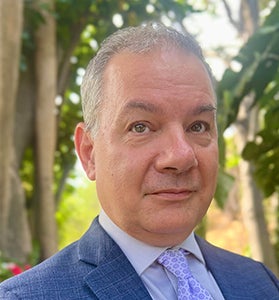
For years, the UCSB Library has invested in dynamic learning spaces and curated, trustworthy resources to support student success. But a 21st-century academic library is more than just study space and collections. In this keynote address, University Librarian Todd Grappone will explore how the Library actively partners with students, TAs, and instructors to both support student academic success.
At a time when faculty and employers increasingly expect students to have foundational skills in coding, data science, quantitative analysis, and artificial intelligence, the Library plays a vital role in preparing students to navigate today’s complex information ecosystem. Through a broad spectrum of digital literacies–including information literacy, data literacy, and AI literacy–the Library equips students with transferable skills essential for academic success, career readiness, and civic participation.
Todd will highlight practical examples of how the Library collaborates to design accessible, engaging learning experiences grounded in reflective inquiry and critical analysis of how information is produced, used, and shared. These partnerships can take many forms within and beyond the classroom, including through the use of affordable, digitized, and open educational resources (OERs), experimentation with digital scholarship technologies and methods, experiential learning, and community participation.
Studies show that students whose courses include information literacy instruction have higher retention rates and GPAs. But beyond these measurable outcomes, critical literacy skills are indispensable to a functioning democracy in an era marked by pervasive misinformation and disinformation. As the Library works toward a future where information is not only accessible but truly open, human expertise and collaboration will remain vital for teachers and learners as they navigate that future thoughtfully and ethically.
Todd Grappone is the University Librarian at UC Santa Barbara. In this role, he serves as the chief executive officer of the UCSB Library, providing strategic vision and operational leadership. He joined UCSB in July 2025 from UCLA where he served as Associate University Librarian from 2010 to 2025 and was responsible for leadership, management, policy, and planning for multiple enterprise- and system-wide departments and leadership groups. A leader at the intersection of libraries and technology, Todd has developed and overseen many large-scale initiatives in digital preservation, global collections development, and post-custodial community archives.
Keynote Panel - Weaving Digital Histories: Open-Source Visual Storytelling as Pedagogy, Dr. Juan Cobo Betancourt and Dr. Santiago Muñoz-Arbeláez
Wednesday, March 18
4-5pm, Library Room 1312
Digital visual storytelling offers a powerful way for students to engage critically with primary sources, but technical barriers to building compelling digital narratives have often kept these projects out of the reach of most classrooms. In this keynote, we share the story of how we developed tools to address this need, starting with Colonial Landscapes, a bilingual digital history project that uses a 17th-century painting of the Bogotá savannah to teach the history of colonialism and environmental change in Latin America, first within the university and later for public audiences beyond it. Out of this experience came Telar, an open-source platform initially designed to allow other educators to make pedagogical content like Colonial Landscapes, but which we soon reimagined as a tool for students to use to develop projects of their own, and in disciplines beyond History.
We reflect on three dimensions of this work: the layered design, which lets users move from broad narrative to close analysis of individual sources, making the same material work at different levels of depth; the narrative strategies we developed to use details within visual sources as the building-blocks of analysis, with each step pairing a specific feature of a source with interpretation, so that arguments unfold through the images themselves; and the open-source, minimal-computing approach that underpins both projects — producing static sites that cost nothing to host, require no ongoing maintenance, and are designed so that any instructor or student can build and publish a project quickly, allowing users to focus on narrative and analysis rather than technical details and making digital storytelling genuinely accessible. Through examples from graduate and undergraduate courses and public-facing work in Colombia, Austin, and Santa Barbara, we show how these tools can be incorporated into teaching and community outreach.
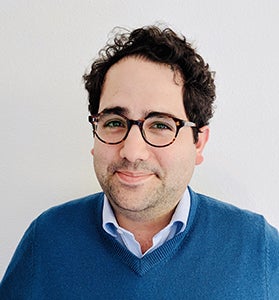
Juan Cobo Betancourt is a historian of religion, law, and language in colonial Latin America, associate professor of history at the University of California, Santa Barbara, and co-founder of the Colombian digital humanities non-profit Neogranadina (neogranadina.org/en). He is the author of The coming of the Kingdom: the Muisca, Catholic Reform and Spanish colonialism in the New Kingdom of Granada (Cambridge, 2024), Mestizos heraldos de Dios: la ordenación de sacerdotes descendientes de españoles e indígenas y la racialización de la diferencia (Bogotá, ICANH, 2012), and with Natalie Cobo co-editor of La legislación de la Arquidiócesis de Santafé en el periodo colonial (Bogotá, ICANH, 2018). He is the lead developer of Telar, and has used the tool in a range of graduate and undergraduate courses at UCSB.
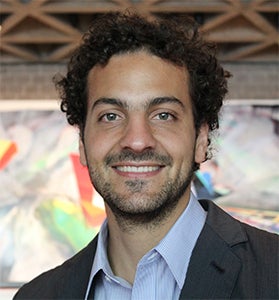
Santiago Muñoz-Arbeláez is Assistant Professor of Latin American History at the University of Texas at Austin and co-founder of the Colombian digital humanities non-profit Neogranadina (neogranadina.org/en). He is the author of The New Kingdom of Granada: The Making and Unmaking of Spain's Atlantic Empire (Duke University Press, 2025), Costumbres en disputa. Los muiscas y el imperio español en Ubaque, siglo XVI (Ediciones Uniandes, 2016), and the digital humanities project Colonial Landscapes: Redrawing Andean Territories in the 17th Century (https://colonial-landscapes.com), which was the predecessor project and inspiration for Telar. He has used Colonial Landscapes and Telar extensively in undergraduate and graduate courses at UT Austin.
